

On 23 March 2020, the UK went into protective lockdown against Covid-19 and I lost my sense of time. The days of the week disappeared into each other, as schools closed and my teenagers started home-learning. Meanwhile, I was often starting work in my dressing gown, sometimes snugged in the corner of the stairs with my laptop, so as to get some quiet without losing broadband connection.
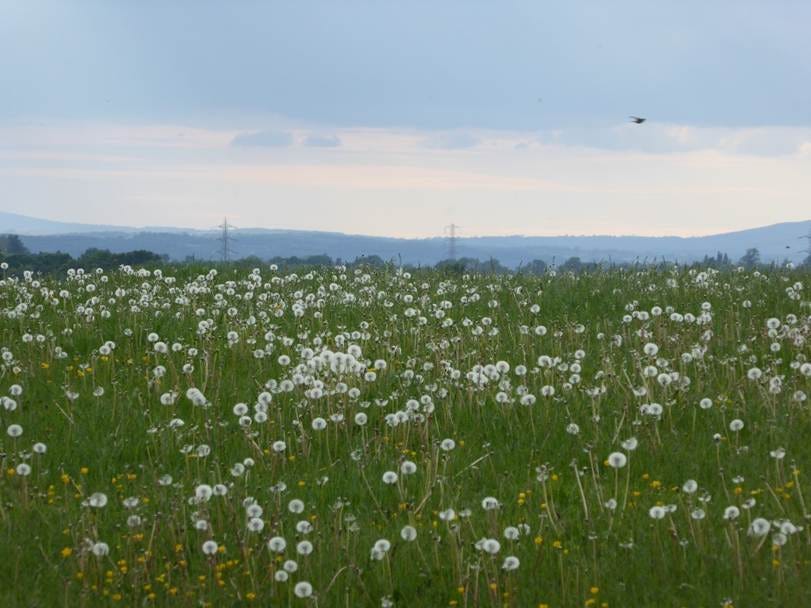
Spring pushed on regardless, as spring does: small knots of violets crept across the lawn, hedgerow blossom petalled my lone cycle rides. Dandelions turned long grass to fields of sun, before thinning to ghosts blown away on the wind – a poignant reminder of loss but also of time and the seasons’ flow.
Time, age and death have preoccupied me from a young age. I was diagnosed with type one diabetes at the age of six, requiring insulin injections (then a continuous insulin infusion through a pump and canula) and continuous 24-7 self-monitoring for the rest of my life. As a teenager, my diabetic grandfather also lived with us, losing a leg and the sight in both eyes because of diabetic complications. The temporariness of existence and everything in this world has always been sharply present in my consciousness.
Like the spring though, much of my personal creativity has been fuelled by winter darkness and difficulties. Like illness, this creativity also comes in both acute and chronic forms.
When the pandemic ‘happened’, I had for the previous four years been working on a chronic project, > Room, charting how my diabetes diagnosis and growing up with a disability affect my adult outlook. This poetry manuscript might still be sat unread on my laptop now were it not for Covid-19.
The virus has had a devastating effect on lives, lifestyles and the economy – there is no ignoring that and no world in which I don’t wish this differently. But it has also encouraged creativity, as we’ve adapted and innovated to work with or around necessary restrictions and limitations (much as a poem’s content does with its form but on a far bigger and important scale) – from Zoom readings, workshops and festivals to a general increase in literary podcasts, audio and films.
Amidst all of this, I applied for Arts Council England emergency funding to turn > Room into a multimedia hypertext narrative – allowing readers to click on links in the text to select their own route through a series of ‘poetry rooms’ featuring poetic fragments, audio, photography, short animations, poetryfilm and even a small downloadable poetry app. > Room is readily accessible from home and partly mirrors lockdown too in the perspective of being simultaneously trapped in one place but also trapped away from the rest of the ‘normal’ world outside. This labyrinthine project is one in which time weighs heavily for me personally both in the years it took to write but also the number of rooms – one for each year of my life at the time, after Lyn Hejinian’s ‘My Life’. (You can explore > Room here, with the chance to help create a new room for the project if you make it through to the end.)
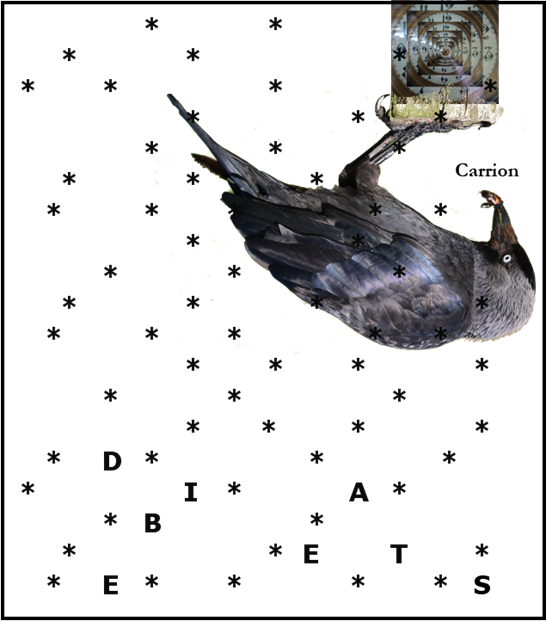
Both age and disability were brought to the forefront for me by covid-19 and the roles these play in making some people more ‘vulnerable’ to the disease. But youth has different sacrifices to survive through in my pandemic collaboration with filmmaker Andrew Curtis. A Plague on All Our Houses is an ‘acute’ poetry project – a poetryfilm written and created in a matter of weeks in direct response to coronavirus. It features a modern Romeo and Juliet living in different cities when lockdown restrictions hit. Unable to see each other, they exchange messages by email, Whatsapp and phone, observing the world around them and hoping for a better future, together, when the pandemic is over.
I called this an ‘acute’ project. But although it was put together comparatively quickly, it takes its starting framework from Shakespeare’s play – lending the narrative an added historic perspective and a different sense of time all together.
Meanwhile, I had also been reading Robert MacFarlane’s Underland: A Deep Time Journey, an amazing, wonder-filled reminder of deep time and time as a tool for perspective. I read it slowly, so as to take in the gorgeous descriptions and its immensity. The layering of rocks and Earth’s lifetime are measured in millennia not just decades – making most things seem small in comparison.
Alongside this, I was re-working a novel(la)-in-flash that started as a coming of age tale for one woman, became extended to her son’s coming of age too before finally becoming a novel about the climate crisis and the future of the planet and millions of species on it. Even the novel-in-flash form itself is a conundrum of time and space, of combining short segments to make something immeasurably bigger and longer.
Time merges, time splits, time expands. Time shifts perspectives on and of everything. The seasons and nature know this intuitively, which is why altered climates are such a significant worry, before, during and beyond the worry of Covid-19.
During lockdown, I headed out on my daily cycle ride into coronavirus-quietened country lanes. The absence of traffic was a peaceful relief. Bird song burst from the bulging hedgerows which were at least twice their winter size, reclaiming the tarmac edges. The scene knew nothing of viral fears. I was in the beautiful world of poet Alison Brackenbury’s ‘In May’ with its hawthorn and patient crab apples, or her ‘So’ with the blue wing of its “truant sky”, though minus this poem’s snow (Skies, Carcanet, 2016). Time here was as open and infinite as the sky above me.
Spring and then summer pushed onwards, as they always do. Shoots, flowers and trees grew up and out; roots grew down and sideways. Words (and language generally) grew and continue to grow in all directions, working with and against time as well as they can.
Reading this article, it might sound like I was busy. Yet, my daily and overall impression of lockdown was one of feeling lethargic and mostly too unmotivated to write or submit work. So, which was the reality – neither, both or something that falls on a sliding comparative scale between these two perspectives?
Five years later, that period has shrunk. Not to nothing but to a memory that is significant yet almost intangible. As traffic returned to the roads, I turned to walking instead. In the town sometimes but more often in quieter spaces, where I’m surrounded as much as possible by nature.
Although the past five years now seems to have sped past at light-speed, the five months of 2020 spring and summer felt like an eternity at the time. ‘In restrospect’ is either the greatest magician or the greatest distorter of time.
The new normal, as it was talked about back then, has become a different/more-tech type of old normal. A large part of normality, it seems now, is noise – the white noise that disappears too easily from our attention unless nudged into a different perspective.
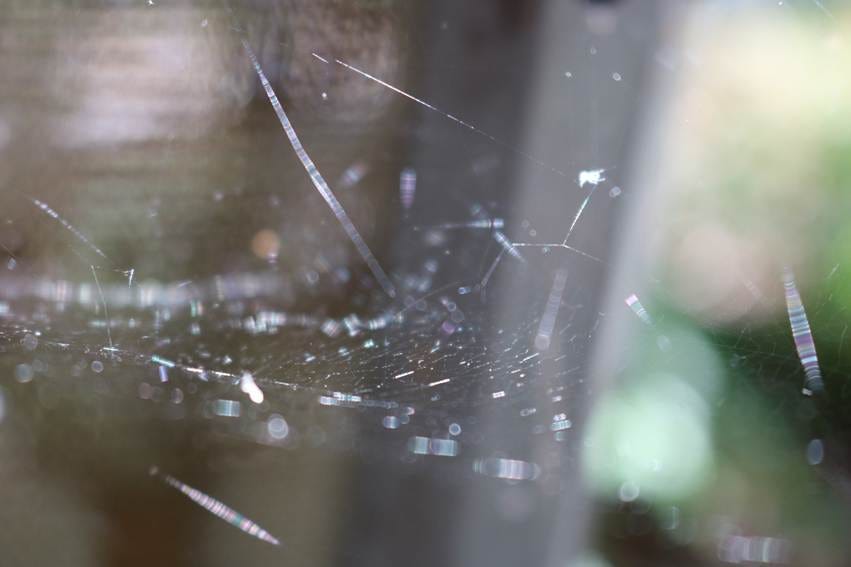
When Covid-19 struck, I lost my sense of time, but I also found new realisation of the need to make time for family and friends, writing and our environment. This new sense of passing days – wide time perhaps I might call it – is one that can telescope to cover more, and sometimes less, than expected. Either way, time, along with difficulty, is one of many tools of shifting perspective that people and writers can thrive on, revealing unexpected webs of light in the darkness, creating chances for change and growth.
For me, that has been the slower pace of walking everyday now rather than cycling. This in turn has given me more time for observation, processing thoughts and allowing myself to be inspired. Perhaps this would have happened anyway, a natural development of ageing. But I think my acute day-to-day writing process has benefited from the slower, wider space.
As for my chronic projects, > Room is still open to new readers/viewers now, while my novel(la)-in-flash remains unpublished though much loved and re-visited.
At some point, I will need to start more acutely looking for an agent/publisher. But with a new poetry collection, Darling Blue (Indigo Dreams Publishing, 2025), out soon, for now I’m letting it ‘evolve’ at its own slower pace. This may not be on a par with the grand scale of actual evolution but it is a pace that hopefully also leaves space for new unexpected shoots and side-projects to grow, like my more mainstream novel.
This article (updated for its use here) was first published on The Blue Nib in July 2020.
If you’re enjoying my posts, please do consider pledging to become a paid subscriber. Alternatively, you can also support me/this Substack with a coffee-tip donation from time to time or by buying my collection Darling Blue (Indigo Dreams, 2025).
Thank you!
I find it quite difficult to look back at that time, let alone write about it — although my debut pamphlet was also written in the midst of it all. Such an incredibly difficult time. You made something of it all.🌹 Sending love, stay creative.
I enjoyed your reflections on Covid, time and your projects, Sarah. ✨